It started with a rover.
I’m Ragesh. My journey has taken me from a university rover team in Kerala to building the software infrastructure behind robots that support the people defending democracy on the front line.
Along the way, I’ve taken robotics systems onto factory floors in Germany and around the world, founded Robotair, and built delivery infrastructure supporting more than 1,500 production robots. Each chapter brought the same question into sharper focus: how do we turn a robot that works into a system people can depend on?
This is the story of how that question shaped me—as an engineer, a founder, and someone who cares about what happens after the demo.
Learning to see the whole machine.
I studied electronics and communication engineering at Amrita University between 2013 and 2017. Building robots gave those subjects a shared purpose: a sensor reading had to become a decision, and that decision had to turn into something a real machine could do.
In 2015, I worked on system integration for a planetary rover. A year later, I led a 15-person multidisciplinary team building a rover with autonomous navigation and manipulation capabilities for the United Kingdom Rover Challenge. Phoenix I and Phoenix II are still an important part of how I think about engineering.
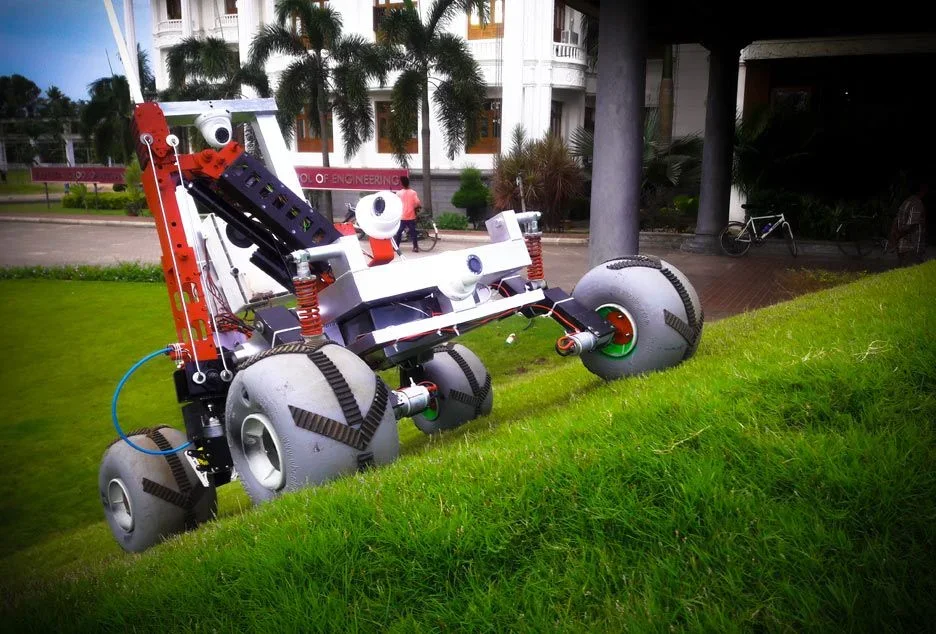
A rover makes the dependencies hard to ignore. Electronics, mechanics, control, and software all meet in the same machine. Leading that team also meant thinking about the interfaces between people: how one person’s decision affects what someone else can build or test.
That is where my habit of looking at the whole system took shape. Today, when I look at a deployment pipeline, I still follow it all the way to the robot and the person who will operate it.
What happens when something goes wrong?
The years around those rover projects let me explore very different sides of robotics: autonomous docking at Ingeniarius, RobotCraft, robotic teaching arms, and systems that brought ground and aerial robots together. Other university work explored remotely operated inspection. In 2017, at the Mechatronics and Intelligent Systems Research Lab, I worked on EMG-based control for a prosthetic arm.
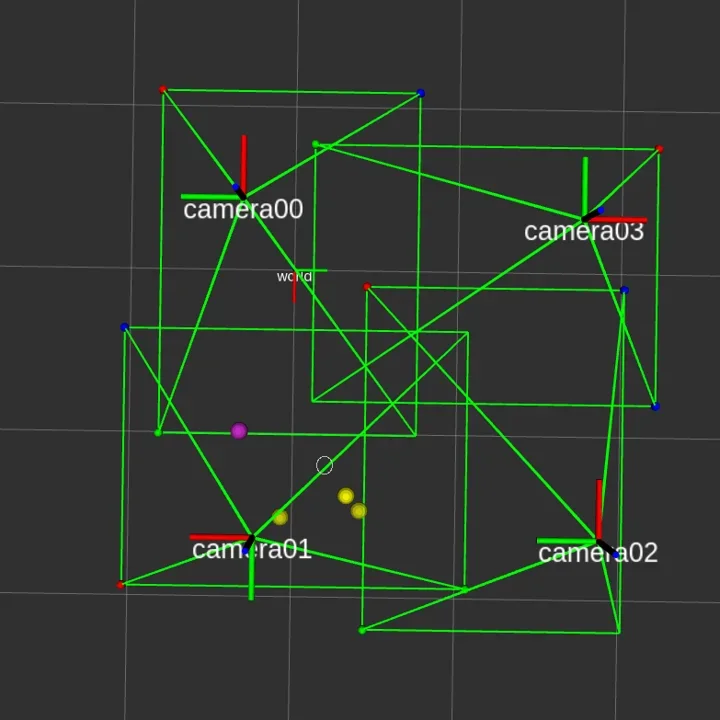
I then moved to France for a master’s in Control and Robotics at École Centrale de Nantes. Working on infrared-camera localization, calibration, and ROS integration gave me a deeper understanding of how a robot’s view of the world is constructed.
My 2019 master’s thesis at Fraunhofer IPA took that thinking in another direction: detecting faults in industrial manipulators and generating recovery actions after abnormal operating conditions.
Recovery became part of the engineering question itself. That idea has stayed with me through release systems and fleet operations: knowing what went wrong, and having a way back, matters as much as getting the happy path to work.
The factory floor changes the question.
I stayed at Fraunhofer IPA, working on industrial robotics from 2019 to 2023. I developed and deployed ROS 2-based autonomous robot fleets, designed architectures for EU-funded projects, and worked with industry partners to turn their requirements into running systems.
A factory introduces another set of realities. The robot has to fit an existing environment. Software changes have to reach it reliably. The people responsible for the system need to understand what they are running and how to keep it working.
Alongside the robotics applications, I began building CI/CD and deployment workflows. Through ROS-Industrial, I also delivered ROS 2 training and technical guidance to industry partners. Building the system and helping another team take ownership of it became connected parts of my work.
This is where deployment became central to my thinking. The value of a robotics system depends on whether people can put it to work, maintain it, and trust the next change.
Building a company around the delivery problem.
In 2023, I founded Robotair. I wanted robotics teams to have a more connected way to move from a software repository to delivery workflows, OTA updates, and visibility into their fleets.
During a 12-month beta, Robotair reached 15 paying customers across Europe and India. That added a different kind of feedback to the engineering process. A capability had to be useful enough for someone to adopt it, use it, and pay for it.
Founding a company made the product side of infrastructure much more concrete for me. Technical decisions also become decisions about usability, cost, and the work a customer can get done. It is a perspective I bring into an engineering team as much as into a product.
Robotair continued into 2025, overlapping with my work at NODE Robotics. The experience fed directly into the in-house delivery capabilities I built there.
When one deployment becomes a fleet.
At NODE Robotics in 2024–2025, I took ownership of delivery infrastructure supporting more than 1,500 production robots across different customer environments.
The work connected the whole route from a software change to a customer deployment. I built provisioning and deployment workflows with Ansible and Terraform, enabling deployments on demand while supporting three software releases a month.
Architecture mattered commercially, too. A hybrid on-premises and VPC design reduced infrastructure costs by 50%. DORA metrics and deployment KPIs made release performance and system stability visible to the engineering team.
Those results came from treating delivery as a system: the build, the environment, the rollout, and the feedback after it reaches the fleet. This was the rover lesson at a different scale. The connections between the parts still determined whether the whole thing worked.
The mission behind my work today.
Today, I work at a stealth defense robotics startup, building the software factory behind the robots. The purpose is concrete: help make those robots dependable for the people using them in the defense of democracy. Some details of this chapter remain private.
I build the infrastructure connecting development, testing, release, and deployment: CI/CD pipelines, verification gates, and an in-house OTA system, including the engineering work behind its CE conformity.
I have also led ISO 9001 and CE certification processes, bringing engineering workflows, quality practices, and software evidence together. Release notes, engineering KPIs, and delivery coordination help the team understand both what is changing and how the work is progressing.
In this setting, the release process is part of how a team earns confidence in what reaches the field. My focus has grown from the robot to the capability of the people building it: a repeatable way to deliver, verify, and maintain software when reliability has consequences beyond the engineering team.
The engineer I have become.
The rover years taught me to see the whole machine. Research gave me a deeper understanding of control and recovery. Factory deployments brought the customer’s environment into the picture. Building Robotair added the discipline of making something people would adopt and pay for. Production fleets made repeatability and cost impossible to ignore.
I bring all of that into my work now. I can follow a problem from the robot through the software, infrastructure, and working practices around it—and connect those decisions to what a customer needs and what a company can sustain.
That is the work I want to keep taking on: the difficult stretch between a promising robot, a useful product, and dependable deployment at scale. Building the technology and building the capability around it have become inseparable for me.
Ragesh
Let’s compare notes.
If you’re building a robotics company, scaling a fleet, or looking for the people turning technical ambition into real-world capability, I’d enjoy comparing notes.